10 Best Control Panel Equipment Suppliers for Global Buyers

10 Best Control Panel Equipment Suppliers for Global Buyers

Choosing reliable control panel equipment suppliers is not a simple price comparison. Global buyers must examine engineering quality, component traceability, delivery performance, and after-sales support. A low quotation can hide longer lead times, limited documentation, or difficult replacement procedures.

This guide compares ten suppliers serving international industrial markets. It considers enclosure design, PLC and HMI integration, motor control, wiring quality, factory testing, and customization capacity. Practical details matter. Can the supplier provide clear electrical schematics? Are terminal labels readable? Can its team support a commissioning engineer across different time zones? These questions often reveal more than a polished product brochure.

Jean-Pascal Tricoire, former Schneider Electric CEO, said, “The future is digital.” His observation remains relevant because modern control panels increasingly connect machines, sensors, software, and energy systems. However, digital capability should not replace sound engineering. A connected panel still needs secure wiring, proper ventilation, dependable protection devices, and documented testing.

This selection also considers international certifications, production experience, communication standards, and warranty policies. Supplier rankings are never permanent. Market conditions change. A company with excellent products may still struggle with local service or urgent spare parts. That limitation deserves attention.

The goal is practical guidance, not exaggerated praise. Each supplier should be evaluated against the buyer’s voltage requirements, operating environment, industry standards, budget, and project schedule. For a food-processing plant, cleanable stainless steel may matter most. For a dusty factory, enclosure protection and thermal management could decide the outcome. The best supplier is rarely the cheapest one. It is the partner that delivers safe, documented, maintainable control panel equipment.
10 Best Control Panel Equipment Suppliers for Global Buyers

What Control Panel Equipment Suppliers Provide

Control panel equipment suppliers provide far more than metal enclosures and switches.

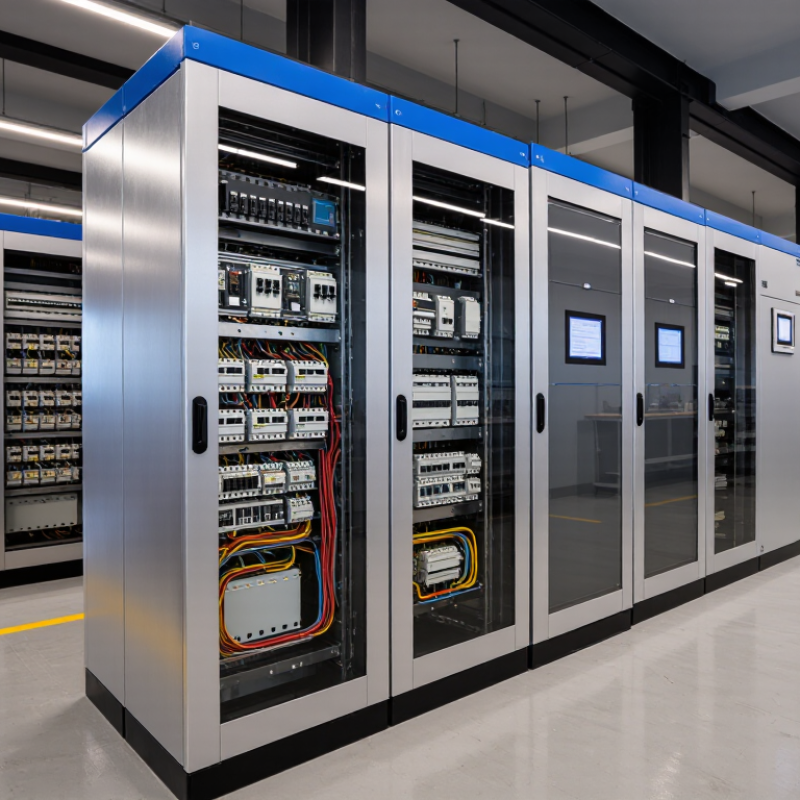
A capable supplier typically offers circuit breakers, busbars, relays, programmable controllers, power supplies, variable-frequency drives, human-machine interfaces, and terminal blocks. They should also provide wiring diagrams, heat calculations, short-circuit ratings, and clear component schedules. These details matter when a panel operates beside dust, vibration, or a 45°C production line.

The market is expanding with industrial automation.

MarketsandMarkets projects the industrial control systems market to grow at more than 5% annually through 2029. The International Energy Agency also reported that global electricity demand rose strongly in 2024, increasing pressure on factories to improve control and energy visibility.

Suppliers respond by offering energy meters, remote monitoring, network gateways, and data-ready control assemblies.

Useful equipment, not decorative technology.

Compliance support is another key service.

Suppliers should design assemblies according to IEC 61439 principles, document testing, and explain regional certification requirements. Factory acceptance testing can verify insulation, labeling, emergency-stop circuits, and simulated alarm conditions before shipment.

Spare terminals and updated drawings save painful hours later. A low quotation may hide weak documentation or poor thermal design.

Not every supplier gets this right. Buyers should inspect sample drawings, request traceable test records, and confirm after-sales response times. Even experienced teams miss small details, especially cable entry space and future expansion capacity.
How to Define Supplier Selection Criteria

When comparing control panel equipment suppliers, global buyers should define selection criteria before requesting quotations. Start with the application: motor control, process automation, power distribution, or a mixed system. A suitable supplier should explain component ratings, enclosure protection, thermal limits, and short-circuit performance in clear technical language. Avoid vague claims.

Evidence matters more than polished presentations. Ask for factory test records, wiring diagrams, material traceability, calibration details, and sample inspection reports. Check whether the supplier follows recognized quality procedures and can provide consistent documentation in English. Review production capacity, lead times, packaging methods, and spare-part availability. A low price means little if labels peel, terminals loosen, or drawings arrive late.

Experience should be tested through practical questions. Can the engineering team review a load schedule? Can it identify heat buildup inside a crowded enclosure? Can it support remote troubleshooting across time zones? Ask for references from similar industries, but verify the details independently. Cybersecurity practices, change control, and secure document handling also deserve attention. They are often overlooked.

Do not judge reliability from one successful shipment. Request a sample inspection or staged approval. I have seen technically strong proposals fail because small revisions were poorly recorded. That weakness may appear again during commissioning. Supplier scoring should therefore include technical competence, communication, quality evidence, delivery control, service response, and total ownership cost. Leave room for uncertainty, and document every assumption before signing.

How to Define Supplier Selection Criteria for Control Panel Equipment

A practical evaluation model for global buyers. The recommended weights total 100% and prioritize compliance, quality, customization, delivery reliability, total cost, after-sales support, and international logistics.

Buyers can score each supplier from 1 to 5 against these criteria, then multiply each score by the corresponding weight to create a consistent and transparent comparison.

Profiles of the 10 Leading Global Suppliers

10 Best Control Panel Equipment Suppliers for Global Buyers

Profiles of the 10 Leading Global Suppliers

Global buyers need more than low prices. Profile one is a high-volume panel builder, offering standardized assemblies for factories. Profile two focuses on certified enclosures for dusty or wet sites. Profile three supplies motor-control centers with clear maintenance access. Profile four specializes in programmable control cabinets and tested wiring. Profile five serves renewable-energy projects, where thermal management matters. Profile six supports water-treatment facilities with corrosion-resistant designs. Profile seven provides compact panels for machine builders and limited floor space. Profile eight handles large infrastructure projects with detailed documentation. Profile nine offers retrofit panels for aging equipment. Profile ten combines engineering support, remote monitoring, and local service partners.

The selection reflects wider market pressure. Deloitte’s 2024 Smart Manufacturing and Operations Survey reported that 86% of manufacturers expect smart manufacturing to strengthen competitiveness within five years. Buyers should therefore examine communication protocols, cybersecurity practices, spare-part access, and commissioning records. IEC 61439 verification remains important for low-voltage assemblies, especially across different regions. MarketsandMarkets also identifies industrial automation as a continuing growth area, driven by connected production and energy efficiency. Numbers can look persuasive. They are not a substitute for factory audits. A supplier may publish impressive test results, yet provide weak after-sales support. Ask for sample drawings, temperature-rise evidence, delivery history, and references from similar climates. One overlooked detail is language support. Installation errors often begin with unclear labels, translated manuals, or missing terminal schedules. Reliability is built in small decisions. The cheapest cabinet can become the most expensive delay.

10 Best Control Panel Equipment Suppliers for Global Buyers - Profiles of the 10 Leading Global Suppliers
Supplier Profile Primary Base Region Typical Years in Operation Main Global Markets Core Equipment and Services Typical Project Capacity Common Compliance Coverage Customization Capability After-Sales Support Buyer Suitability Overall Assessment
Supplier Profile 01 Western Europe 50+ years Europe, North America, Middle East, Asia-Pacific MCC panels PLC cabinets Power distribution Engineering Small custom panels to multi-cabinet industrial systems IEC-based design; CE-oriented documentation; project-specific UL or regional requirements where applicable High; supports complex specifications, enclosure layouts and control architectures Commissioning assistance, spare-parts planning, remote troubleshooting and field-service options Large industrial plants, infrastructure contractors and multinational OEM projects ★★★★★
Supplier Profile 02 North America 40–60 years United States, Canada, Latin America and selected export markets Industrial control panels Motor controls Automation integration Testing Single-machine assemblies to complete plant control systems UL-oriented panel construction; NEC-aligned practices; documented factory acceptance testing High; strong capability for retrofit work and site-specific engineering Start-up support, documentation packages, training and maintenance assistance Process industries, water treatment, manufacturing and energy projects ★★★★★
Supplier Profile 03 East Asia 25–40 years Asia-Pacific, Europe, Middle East and emerging markets PLC control cabinets HMI panels VFD cabinets OEM assembly Standardized batch production and medium-size custom projects IEC practices; CE documentation for applicable markets; export test records available by project High for repeatable designs, modular systems and OEM production programs Remote technical support, wiring documentation and replacement-component coordination Equipment manufacturers, machine builders and cost-sensitive industrial buyers ★★★★☆
Supplier Profile 04 Central Europe 30–50 years European Union, United Kingdom, Middle East and North Africa Low-voltage switchboards Automation panels EPLAN design FAT services Medium to large engineered systems with multiple feeder sections IEC 61439-oriented assemblies; CE-related technical files; risk and design documentation Very high; suitable for engineered-to-order and high-documentation projects On-site commissioning, preventive maintenance and long-term technical documentation Commercial infrastructure, factories, utilities and system integrators ★★★★★
Supplier Profile 05 Southern Europe 35–55 years Europe, North Africa, Middle East and Latin America Power control panels Motor control centers Enclosures Site services Industrial projects ranging from compact cabinets to complete MCC lineups IEC-based manufacturing; CE-market support; project-specific short-circuit and heat-rise documentation High; offers mechanical, electrical and thermal customization Installation guidance, commissioning, inspection support and spare-parts services Heavy industry, HVAC, water, food processing and infrastructure projects ★★★★☆
Supplier Profile 06 United Kingdom and Ireland 25–45 years United Kingdom, Ireland, Europe, Middle East and selected international markets Bespoke control panels SCADA interfaces PLC systems Remote monitoring Single-site automation packages to multi-panel process-control systems IEC-oriented design; UK market documentation; project-specific environmental and safety records Very high; strong in software integration, process sequencing and retrofit applications Remote diagnostics, operator training, software backups and planned maintenance Water utilities, process plants, building services and automated production lines ★★★★☆
Supplier Profile 07 South Asia 20–40 years South Asia, Gulf countries, Africa and Southeast Asia PCC panels MCC panels APFC panels Automation cabinets Standard commercial panels to large industrial distribution systems IEC-based production; local electrical regulations; export compliance prepared according to destination High; flexible for budget-driven projects and locally available component alternatives Installation support, testing, commissioning assistance and documentation updates Commercial buildings, factories, solar facilities and regional EPC contractors ★★★★☆
Supplier Profile 08 Middle East 20–35 years Gulf region, North Africa, Central Asia and South Asia LV switchgear Motor control Pump control EPC support Building services, utilities and oil-and-gas auxiliary systems IEC-oriented assemblies; regional authority approvals; project-specific inspection and testing files Medium to high; experienced with harsh-climate enclosures and site requirements Local installation supervision, field troubleshooting and maintenance contracts Infrastructure, desalination, district cooling, utilities and regional EPC projects ★★★★☆
Supplier Profile 09 Australia and New Zealand 25–45 years Australia, New Zealand, Pacific Islands and selected Asian markets Mining control panels Remote I/O Switchboards Field service Ruggedized control systems for remote and demanding operating environments Regional electrical rules; IEC practices where required; environmental and ingress-protection documentation High; strong capability for custom protection, ventilation and remote-operation requirements Field service, commissioning, remote support and replacement-panel planning Mining, water, renewable energy, utilities and remote industrial facilities ★★★★☆
Supplier Profile 10 Latin America 20–40 years Brazil, Mexico, Chile, Colombia, Peru and neighboring markets Industrial panels Drive systems Process automation Retrofit projects Local industrial projects and medium-scale export-oriented systems IEC-based design; national electrical requirements; destination-market documentation available by project High; particularly suitable for modernization, replacement and locally engineered solutions On-site commissioning, operator training, maintenance and retrofit assistance Manufacturing, mining, food processing, water and renewable-energy projects ★★★★☆

Note: Supplier profiles are anonymized and presented as comparative market categories. Actual certifications, capacity, lead times and service coverage should be verified directly against the supplier’s current project documentation and quotation.

Comparing Product Range, Quality, and Certifications

Global buyers often compare ten control panel equipment suppliers by catalog size, but range alone can mislead. A dependable supplier should cover enclosures, circuit protection, busbars, terminals, relays, PLC interfaces, HMIs, cooling units, and cable glands. More importantly, these components should work together without forced substitutions. Fit matters.

Quality becomes visible in small details. Check copper thickness, terminal torque consistency, enclosure welds, gasket compression, and stated IP ratings. Ask for routine test records, material traceability, and sample inspection photos. Suppliers with ISO 9001 systems usually provide clearer process control, but certification does not guarantee flawless field performance. Real evidence matters more. A practical audit may include thermal checks, insulation tests, wiring reviews, and a comparison between drawings and delivered parts.

Certifications should match the destination market and application. Depending on the project, buyers may need IEC 61439 design verification, UL 508A evidence, CE-related documentation, or local conformity records. Request current certificates, test reports, declarations, and certificate scopes. Paperwork matters. A certificate covering one product family may not cover the complete panel assembly. Suppliers offering customized layouts, short replacement lead times, and remote technical support deserve closer attention. Still, broad product ranges can hide weak engineering depth. I would test a small order before approving a large contract, even when the supplier appears highly qualified. Perfect documentation is rare; consistent communication is not optional.

Evaluating International Support, Pricing, and Delivery

Choosing among the 10 best control panel equipment suppliers requires more than comparing unit prices. International buyers should examine technical support, delivery reliability, and total landed cost. A control panel delayed at a port can stop an entire production line.

The World Bank’s 2023 Logistics Performance Index assessed 139 economies across customs, infrastructure, tracking, and delivery timeliness. These measures are useful when reviewing supplier promises. Ask for documented lead times, export experience, spare-parts procedures, and shipment tracking.

Pricing should include engineering, packaging, duties, insurance, and commissioning support. A low quote may look clever. It may hide costly exclusions. Suppliers offering remote troubleshooting in multiple time zones can reduce downtime, especially when local technicians are unavailable.

Still, support claims need evidence, not polished website language. Request response-time records or anonymized service examples.

Tips:

Compare three landed-cost scenarios. Test a standard order, an urgent replacement, and a custom panel. Confirm voltage, enclosure rating, certifications, and documentation before payment.

The 2024 World Bank Commodity Markets Outlook also highlights continuing uncertainty in transport and input costs, so fixed-price validity should be stated clearly.

I would not rely on one impressive reference project. Check recent delivery performance, inspection records, and after-sales contacts.

Some assumptions will be wrong. Flag them early.