How to Choose Electrical Control Panel Equipment?

How to Choose Electrical Control Panel Equipment?

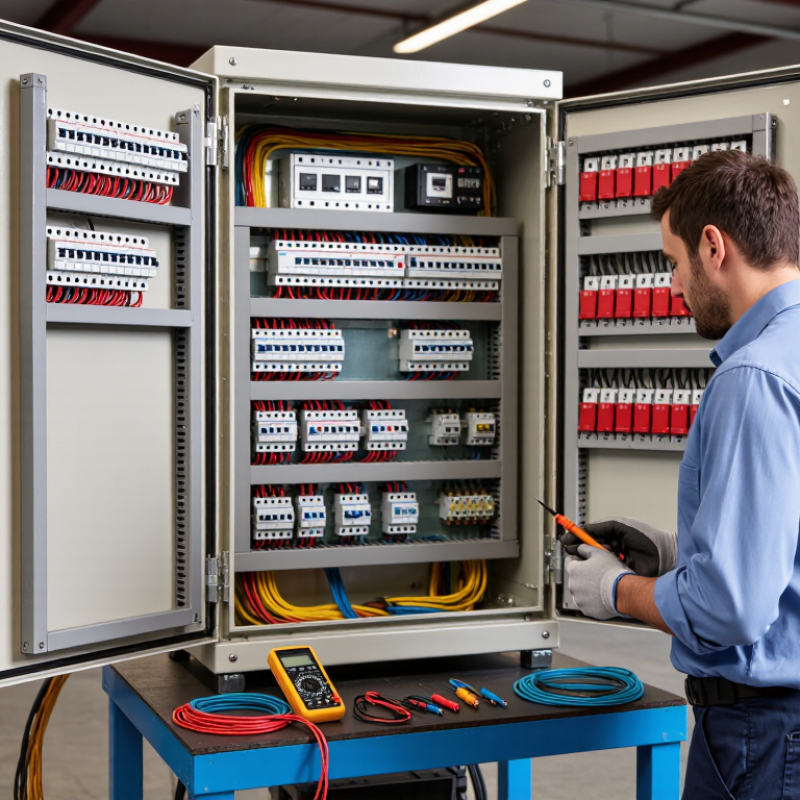
Choosing electrical control panel equipment is not simply a matter of comparing prices or counting components. A panel may look neat on a workshop bench, yet fail in a dusty factory, humid plant room, or outdoor cabinet. The right decision begins with the load, operating environment, safety requirements, and future maintenance needs.

Mike Holt, an electrical training expert, states, “Safety is not an option; it is a requirement.” That principle should guide every selection. Check the motor ratings, short-circuit current, voltage, control method, and available space before choosing breakers, contactors, relays, PLCs, drives, or power supplies. A VFD may improve motor control, but it can also create heat and electrical noise. A small enclosure may reduce cost, but crowded wiring makes testing and repairs slower. Measure twice.

The enclosure deserves careful attention. Compare NEMA or IP protection ratings with real site conditions, including water spray, metal dust, vibration, and temperature. Confirm that terminal blocks, disconnects, and protective devices match the conductor sizes. Verify SCCR ratings and applicable local standards with a qualified professional. Documentation matters too. Clear labels, updated schematics, and spare terminals can prevent hours of troubleshooting.

There is no perfect panel.

Even experienced designers can overlook heat buildup or future expansion. That weakness deserves an honest review. Before approval, inspect the layout, test the control logic, and ask whether a technician can safely isolate one circuit. This guide explains how to make those decisions with practical evidence, disciplined checks, and fewer expensive surprises.

How to Choose Electrical Control Panel Equipment?

Define the Electrical Control Panel’s Purpose and Operating Requirements

How to Choose Electrical Control Panel Equipment?

Define the panel’s purpose before selecting any component. A motor-control panel needs different equipment from a process-sequencing or energy-monitoring panel. Write the operating sequence in plain language. Identify every input, output, alarm, safety interlock, and communication signal. Then record voltage, full-load current, starting current, short-circuit current rating, and switching frequency.

Environmental conditions matter just as much. Note ambient temperature, humidity, dust, vibration, corrosive gases, and available enclosure space. The IEC 60204-1 standard provides practical guidance for machinery electrical equipment, while NFPA 79 addresses industrial machinery installations.

The IEA Electricity 2024 report expects global electricity demand to grow by about 3.4% annually from 2024 through 2026. That growth increases the need for efficient control, accurate measurement, and maintainable designs. DOE data also indicates that motor-driven systems use roughly 70% of industrial electricity. A poorly specified panel can quietly waste energy.

Tips: Build a simple load list before requesting quotations. Include normal and worst-case conditions. Check heat dissipation inside the enclosure. Leave space for wiring and future expansion. A tidy drawing is helpful, but it is not proof of a reliable panel. Field checks often reveal missing spare terminals, unclear labels, or heat that calculations underestimated. Review the design with an electrician and the equipment operator. Their concerns may differ. That is useful.

Assess Voltage, Current, Load, and Environmental Conditions

How to Choose Electrical Control Panel Equipment?

Assess Voltage, Current, Load, and Environmental Conditions

Start with the actual supply voltage, not the value written on an old drawing. Measure it during normal operation and observe possible fluctuations. Select equipment with voltage ratings that safely cover the measured range. Check phase arrangement, frequency, and insulation requirements before choosing breakers, contactors, or power supplies. Measure it.

Current demand needs more than a simple nameplate reading. Record running current for motors, heaters, pumps, and control circuits. Include starting current, inrush current, and future operating changes. A motor may run at 18 amps but briefly demand much more during startup. I once sized a panel from average current alone, and the protective device tripped repeatedly. That shortcut seemed reasonable, but it was wrong.

Study the load type and its duty cycle. Resistive loads, motors, transformers, and electronic equipment stress components differently. Leave practical capacity for heat, expansion, and imperfect field data. Environmental conditions matter just as much. Heat matters. Check ambient temperature, humidity, dust, vibration, corrosive vapors, and water exposure. A dusty workshop may need a sealed enclosure, while a hot cabinet may require ventilation or cooling. Confirm the enclosure’s protection rating for the installation area, then review terminal spacing and cable bending space. These details are easy to overlook during design, especially when a compact panel looks attractive on paper.

Select Protective, Switching, and Control Components

How to Choose Electrical Control Panel Equipment?

Selecting control panel equipment starts with the load, environment, and expected fault conditions. Protective components should match voltage, current, short-circuit capacity, and cable characteristics. A circuit breaker or fuse must interrupt faults safely, not merely carry normal current. Consider heat, dust, moisture, vibration, and available enclosure space. Small details matter.

Switching components control how power moves through the panel. Contactors, disconnectors, and isolators should suit the motor’s duty, switching frequency, and utilization category. Check terminal ratings carefully. A component may fit physically but fail under repeated electrical stress. Protection against overload and phase loss may also be necessary for motor circuits. Design verification should follow applicable requirements, such as IEC 61439 and IEC 60947, where relevant.

Control components shape operation and maintenance. Select relays, pushbuttons, sensors, and controllers with compatible voltage, signal type, and response time. Keep safety-related functions separate from ordinary automation where required.

Tips: Label every wire clearly, leave space for heat dissipation, and document the final settings. Test the panel under realistic load conditions. Do not trust a perfect drawing alone. Field conditions often expose assumptions. An experienced panel engineer will review coordination between protective, switching, and control devices, then record inspection results and changes. That record supports safer troubleshooting later.

Verify Compatibility, Safety Standards, and Panel Layout

Choosing electrical control panel equipment begins with compatibility, not appearance.

Check voltage, current, frequency, communication protocols, and environmental ratings before ordering. A component may fit physically yet fail during startup. I once saw a compact enclosure accept every device, but its power supply lacked enough reserve capacity. That mistake caused unstable readings.

Safety standards must guide each selection.

Confirm protection against electric shock, overheating, short circuits, dust, and moisture. Use documented ratings and inspection records from reliable manufacturers. Follow the electrical codes required in the installation region. Leave clearances around terminals, fuses, and heat-producing devices. Label wires and protective devices clearly. Small details matter. An emergency disconnect should remain visible and reachable, even when the panel door is open.

Tips:

Draw the panel layout before purchasing equipment. Place high-voltage parts away from sensitive signal wiring. Keep heat-generating devices near ventilation paths, but avoid blocking airflow. Reserve space for future terminals and maintenance tools. It is tempting to fill every available section, but crowded wiring slows fault finding and increases accidental contact risks. Review the drawing with an experienced electrician, then compare it with the finished panel. The drawing may look perfect. The real panel may not.

Review Installation, Maintenance, and Future Expansion Needs

How to Choose Electrical Control Panel Equipment?

Choosing electrical control panel equipment should begin with the room, not the catalog. During a site walk, record supply voltage, available fault current, ambient temperature, dust, moisture, and working clearance. A panel near a washdown area needs stronger enclosure protection than one inside a clean control room. Leave room for cable bending and heat release. Crowded panels are difficult to inspect. They also age faster.

Installation details often decide whether equipment performs reliably. Confirm terminal sizes, conductor paths, grounding points, and labeling before delivery. Ask a qualified electrician to verify drawings against actual conditions. Small mismatches matter. A door may block maintenance access, or a short cable route may force sharp bends. Testing should include insulation checks, protective-device settings, control logic, and emergency functions. Follow applicable standards and site procedures. Keep test records with updated drawings.

Maintenance needs should shape every selection. Choose accessible components, clear status indicators, replaceable filters, and spare terminals. Schedule inspections for loose connections, dust buildup, hot spots, and unusual noise. Use thermal scanning when equipment ratings and operating risks justify it. Plan expansion early. Reserve DIN rail space, enclosure capacity, power supply margin, and communication ports. Still, over-sizing can waste money and create poor heat management. That tradeoff deserves review. Future loads may change. Recheck assumptions with operations staff before approving the panel.

How to Choose Electrical Control Panel Equipment? - Review Installation, Maintenance, and Future Expansion Needs

Selection criteria should be confirmed against the applicable electrical code, site conditions, equipment ratings, and the project engineer’s load calculations.
Equipment Category Primary Function Installation Review Maintenance Considerations Typical Environmental Requirement Future Expansion Planning Practical Selection Check
Main Disconnect Provides a means to isolate the control panel and connected circuits from the power source. Verify voltage, continuous current rating, interrupting capacity, enclosure location, and required working clearance. Inspect terminals, mechanical operation, signs of overheating, and identification labels during scheduled shutdowns. Indoor or protected outdoor installation
Use an enclosure suitable for dust, moisture, and corrosion exposure.
Allow space and spare capacity for additional feeders or a larger disconnect if the connected load may increase. Confirm the disconnect rating is compatible with the calculated fault current and the panel’s service requirements.
Circuit Protection Protects conductors and equipment against overcurrent and short-circuit conditions. Coordinate trip ratings with conductor ampacity, available fault current, and upstream and downstream protection. Check for nuisance tripping, heat damage, loose connections, and correct operating mechanisms. Temperature-sensitive
Ambient temperature can affect the usable rating of protective devices.
Reserve DIN-rail or panel space and maintain a clear circuit schedule for future protective devices. Use selective coordination where continuity of critical loads is important.
Contactors and Motor Starters Controls motors and other electrical loads through switching and overload protection. Check motor full-load current, starting method, coil voltage, switching duty, conductor routing, and heat dissipation. Inspect contact wear, coil condition, overload settings, terminal tightness, and abnormal noise or vibration. Ventilated enclosure
Heat generated by switching devices may require spacing or forced ventilation.
Provide spare mounting positions, control terminals, and auxiliary contacts for additional motors or interlocks. Select overload protection based on the motor nameplate data and the required starting profile.
Variable-Frequency Drive Adjusts motor speed and torque while supporting process control and energy management. Review motor compatibility, input and output wiring, cable length, grounding, ventilation, and electromagnetic interference control. Keep cooling paths clean, inspect fans and filters, review fault history, and verify parameter backups. Temperature and dust controlled
Clearance around the drive must follow the equipment installation instructions.
Allow additional panel heat capacity, spare network points, and room for future drives or line reactors. Check drive derating, harmonic impact, braking requirements, and motor insulation suitability.
Programmable Controller Executes control logic, sequencing, monitoring, and communication functions. Plan power separation, grounding, I/O wiring, network topology, access for programming, and noise mitigation. Maintain program backups, inspect power supplies and terminals, review diagnostics, and document software revisions. Clean, dry control environment
Protect electronics from condensation, conductive dust, and excessive heat.
Choose a modular architecture with spare I/O channels, rack capacity, network capacity, and power-supply margin. Document all I/O addresses, signal types, communication settings, and approved software versions.
Power Supply Converts incoming power to the control voltage used by relays, controllers, sensors, and actuators. Calculate the continuous and inrush load, verify input voltage, provide overcurrent protection, and separate noisy loads where needed. Check output voltage, alarm contacts, ventilation, terminal tightness, and signs of capacitor or heat-related degradation. Low heat and adequate airflow
Maintain manufacturer-specified spacing around the supply.
Provide reserve output capacity and consider redundant supplies for high-availability control systems. Size for normal load plus inrush current and a reasonable engineering margin.
Terminal Blocks and Wiring Accessories Organize, terminate, test, and distribute field wiring within the control panel. Use correctly rated terminals, wire sizes, ferrules where appropriate, jumpers, end stops, and segregation by circuit level. Inspect for loose wires, discoloration, broken labels, corrosion, and damaged insulation during maintenance. Matched to conductor and enclosure conditions
Use suitable materials for vibration and corrosive atmospheres.
Install spare terminals and provide wire duct capacity for additional field circuits. Ensure every terminal and conductor is permanently identified in the wiring documentation.
Human-Machine Interface Displays process information and allows authorized users to issue commands or adjust settings. Assess viewing angle, mounting height, operator access, enclosure cutout, cable routing, and cybersecurity controls. Clean the display, verify touch or keypad functions, check alarms, and confirm user-access permissions. Front-panel environmental rating
Protection should match dust, water, impact, and cleaning conditions.
Reserve communication capacity and screen layout flexibility for additional alarms, trends, and process data. Use clear alarm priorities and provide an approved backup of configuration files.
Network and Communication Equipment Connects controllers, drives, remote I/O, supervisory systems, and diagnostic tools. Review protocol compatibility, cable type, shielding, grounding, topology, port count, and network segregation. Check link status, error logs, connectors, firmware records, and cable strain relief. Low-interference installation
Separate communication wiring from high-power and high-noise circuits.
Include spare ports, address capacity, rack space, and documented network pathways. Define network ownership, access control, backup procedures, and change-management requirements.
Panel Enclosure and Thermal Management Protects equipment and provides a structured environment for safe operation and maintenance. Evaluate enclosure material, dimensions, ingress protection, cable entry, door clearance, mounting, and heat load. Inspect seals, hinges, locks, filters, fans, heaters, condensation control, and internal cleanliness. Site-specific enclosure selection
Consider indoor, outdoor, washdown, corrosive, dusty, and hazardous-area conditions.
Choose a larger enclosure or modular layout when future components, wiring, or heat dissipation may be added. Calculate internal heat dissipation rather than relying only on available physical space.
Safety Control Equipment Helps bring machinery to a defined safe state during emergency or hazardous conditions. Identify hazards, required safety functions, reset locations, feedback circuits, and applicable risk-reduction requirements. Test emergency-stop circuits, guard switches, safety relays, diagnostics, and reset behavior at the defined interval. Protected and clearly identified
Safety devices must remain accessible and protected from accidental damage.
Keep safety circuit documentation current and allow for additional guards, interlocks, or monitored zones. Validate the complete safety function, not only individual components, after installation or modification.