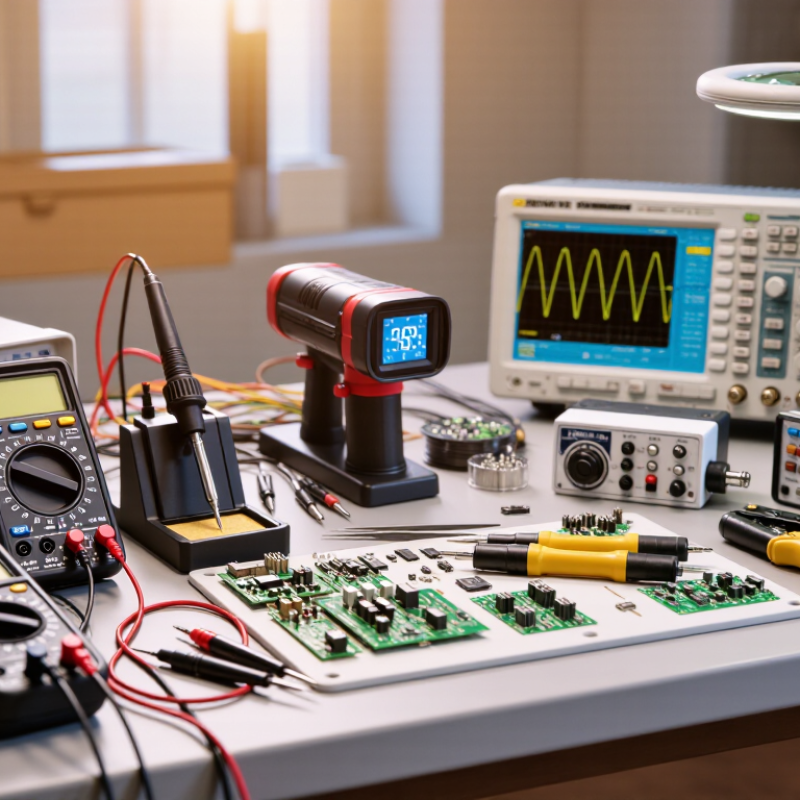
Electronic tools and equipment shape how technicians test, repair, build, and maintain modern systems. From a compact multimeter on a workbench to a programmable power supply beside a circuit board, each tool serves a distinct purpose. The best choices depend on accuracy, safety, durability, and the task itself. Practical experience often reveals details that product descriptions overlook.
This guide examines ten major categories, including testing instruments, soldering equipment, oscilloscopes, power supplies, signal generators, and inspection devices. It also considers wire processing tools, static-control equipment, circuit prototyping tools, and thermal measurement instruments. These categories support work in electronics repair, manufacturing, education, laboratory testing, and field service. Real performance matters.
A reliable tool should provide stable readings, clear controls, and suitable protection ratings. Calibration records, user manuals, and manufacturer support also deserve attention. Small differences can affect important decisions. A cheap probe may introduce noise, while poor insulation can create unnecessary risk. However, expensive equipment is not automatically better. That assumption needs reconsideration. A skilled user with a modest meter may achieve better results than an inexperienced operator using advanced equipment. Conditions also change between a quiet laboratory and a crowded repair bench. For this reason, the discussion balances technical capability with practical usability, maintenance needs, and responsible operation. Readers should verify specifications before purchase and follow relevant safety guidance. No list can fit every workshop perfectly. That limitation is worth admitting.
Testing and Measurement Tools for Accurate Electronic Analysis
Electronic analysis depends on reliable measurements, not attractive equipment lists. The ten most useful categories include digital multimeters, oscilloscopes, signal generators, bench power supplies, LCR meters, spectrum analyzers, power analyzers, logic analyzers, frequency counters, and thermal cameras. Each reveals a different failure pattern. A multimeter checks voltage, current, and resistance. An oscilloscope exposes ringing, noise, timing errors, and unstable waveforms.
MarketsandMarkets reported that the electronic test equipment market could grow from about USD 21.6 billion in 2023 to USD 28.0 billion by 2028. That forecast reflects rising demand for faster validation and tighter manufacturing controls. It does not guarantee better measurements. Probe loading can still distort a circuit. Poor grounding can create false noise. I have seen a clean-looking waveform change after moving one probe clip.
Accurate analysis also requires disciplined calibration. ISO/IEC 17025 emphasizes laboratory competence, traceability, and documented uncertainty. NIST guidance similarly treats uncertainty as part of every credible measurement. Technicians should record the instrument range, probe type, ambient temperature, and calibration status. Thermal cameras need correct emissivity settings. Spectrum analyzers need suitable resolution bandwidth. Small details matter. Yet perfect testing is unrealistic. Cables age, connectors loosen, and operators make assumptions. The most dependable workflow leaves room to question every unusually convenient result.
Testing and measurement tools support accurate electronic analysis. This chart compares ten widely used tool categories by a representative frequency ceiling or analysis bandwidth. Values are typical instrument-class examples rather than brand-specific specifications, and exact limits vary by configuration.
Higher-frequency instruments are commonly used for RF, microwave, signal-integrity, and communications testing, while lower-frequency tools are typically used for component, power, and low-frequency circuit analysis.
What Are the Top 10 Types of Electronic Tools and Equipment?
Assembly and Soldering Equipment for Building Electronic Circuits
Building an electronic circuit requires more than a soldering iron. A practical workbench may include a temperature-controlled station, solder wire, flux, tweezers, side cutters, wire strippers, and a precision screwdriver set. A digital multimeter checks voltage, resistance, and continuity before small faults become expensive problems. An adjustable bench power supply also helps test circuits under controlled conditions.
Soldering quality depends on heat, timing, and surface preparation. I usually clean the board, apply a small amount of flux, and heat both the pad and component lead. The solder should flow smoothly, not form a dull lump. Keep it steady. A fume extractor improves comfort, while safety glasses protect against clipped wire ends and solder splashes. For surface-mount work, a magnifying lamp or inspection microscope reveals bridges that normal eyesight can miss.
Hot-air tools and compact reflow equipment can speed up repeated assembly, but they demand careful temperature control. Excessive heat may lift pads or damage sensitive components. My early boards were functional, yet several joints looked untidy because I rushed inspection. That mistake still matters. Testing each connection, checking polarity, and cleaning flux residue create more reliable results. A stable work surface and organized component trays reduce errors during long assembly sessions.
| No. | Tool or Equipment Type | Primary Category | Typical Specifications | Main Function | Best Use in Circuit Building | Important Selection Considerations |
|---|---|---|---|---|---|---|
| 1 | Temperature-Controlled Soldering Station | Soldering Equipment | 50–100 W power; approximately 200–480°C adjustable temperature range; interchangeable fine and chisel tips | Heats solder joints and component leads to create reliable electrical and mechanical connections. | Through-hole assembly, connector installation, wire soldering, and general PCB work | Temperature stability, rapid heat recovery, grounded or ESD-safe design, tip availability, and comfortable handpiece |
| 2 | Hot-Air Rework Station | Rework Equipment | Approximately 300–500 W heater; adjustable airflow; typical air temperature range of about 100–500°C | Transfers heated air to soften solder without direct contact between a metal tip and the component. | Removing and installing surface-mount devices such as SOIC, QFP, PLCC, and some QFN packages | Stable temperature control, adjustable airflow, nozzle size range, thermal protection, and safe handling of nearby components |
| 3 | Desoldering Pump | Desoldering Tool | Spring-loaded or vacuum-operated mechanism; heat-resistant nozzle; commonly used with a separate soldering iron | Removes molten solder from plated holes and solder joints by creating a short vacuum pulse. | Replacing through-hole components, clearing connector holes, and correcting soldering errors | Strong suction, antistatic construction, replaceable nozzles, easy one-handed operation, and heat resistance |
| 4 | Solder Wick | Desoldering Consumable | Bare or flux-treated copper braid; common widths range from approximately 1.5 to 5 mm | Absorbs molten solder through capillary action when heated against a solder joint. | Removing solder bridges, cleaning SMD pads, and reducing excess solder on PCB joints | Braid width, compatible flux, low-residue performance, heat transfer, and suitability for fine-pitch pads |
| 5 | Solder Fume Extractor | Safety Equipment | Fan-driven filtration system; often uses activated carbon and particulate filtration; adjustable arm or nozzle | Captures airborne smoke and flux fumes produced during soldering. | Workbenches used for repeated soldering, repair, prototyping, and educational laboratory activities | Airflow direction, filter type, replacement cost, noise level, capture distance, and maintenance requirements |
| 6 | PCB Holder and Assembly Stand | Assembly Support | Adjustable clamps; commonly accommodates small and medium circuit boards; rotating designs may provide approximately 360° access | Secures a printed circuit board while leaving both hands available for soldering and component placement. | Double-sided PCB assembly, inspection, wire attachment, and rework | Clamp range, board protection, rotation mechanism, base stability, height, and compatibility with irregular board shapes |
| 7 | Precision Wire Stripper and Crimping Tool | Wiring and Termination | Typical stripping capacity from about 0.05 to 6 mm², depending on tool design; interchangeable or integrated crimp profiles | Removes insulation and forms secure mechanical terminations on wires and contacts. | Harness construction, terminal installation, jumper wires, connectors, and power leads | Supported wire gauges, conductor damage prevention, crimp-profile accuracy, handle comfort, and repeatability |
| 8 | Digital Multimeter | Test and Measurement | Measures DC and AC voltage, current, resistance, and continuity; many models also measure capacitance, frequency, or diode forward voltage | Checks electrical values and verifies continuity, polarity, resistance, and circuit faults. | Initial PCB testing, power-rail verification, component checks, and troubleshooting | Measurement ranges, accuracy, input impedance, current protection, continuity response, and safety category rating |
| 9 | Oscilloscope | Signal Measurement | Entry-level units commonly offer 20–100 MHz bandwidth and at least two channels; sampling rate varies by model | Displays voltage as a function of time to reveal waveform shape, noise, timing, and transients. | Debugging clocks, PWM signals, communication buses, switching supplies, and analog circuits | Bandwidth, sample rate, memory depth, probe compensation, channel count, trigger performance, and input protection |
| 10 | Adjustable DC Bench Power Supply | Power and Test Equipment | Common single-output ranges include 0–30 V and 0–3 A; constant-voltage and constant-current modes are standard | Provides controlled DC power for circuits while limiting voltage and current during testing. | Prototype testing, board bring-up, fault diagnosis, battery-powered circuit simulation, and load testing | Voltage and current range, regulation, ripple, over-current protection, display resolution, output isolation, and thermal management |

Electronic work depends on three connected areas: power, control, and signal management. The right equipment improves safety, accuracy, and troubleshooting speed. In practical workshops, the top ten types include power supplies, batteries, transformers, inverters, circuit breakers, relays, switches, multimeters, oscilloscopes, and signal generators.
Power supplies deliver stable voltage for testing circuits. Batteries provide portable energy, while transformers adjust voltage levels. Inverters convert electrical forms for suitable applications. Circuit breakers interrupt dangerous current quickly. Relays and switches control loads without placing sensitive components under excessive stress. A multimeter checks voltage, resistance, and current. An oscilloscope reveals unstable waveforms that a basic meter may miss. Signal generators create controlled test signals for communication and automation equipment. Small details matter. Loose probes can create false readings.
Tips: Confirm voltage, current, and frequency ratings before connection. Keep test leads short when measuring fast signals. Inspect insulation for cuts or heat damage. Record unusual readings instead of trusting memory. I sometimes expect a faulty component too quickly, but the cable or connector is often responsible. That mistake remains a useful reminder to test the simplest point first. Use protective equipment and follow documented procedures during live testing. Good measurement is not only about having advanced tools; it also requires patience, clean connections, and repeatable methods.
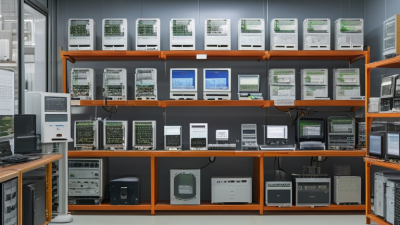
A reliable electronics bench often includes ten essentials: digital multimeters, oscilloscopes, bench power supplies, signal generators, logic analyzers, soldering stations, desoldering tools, thermal cameras, insulation testers, and ESD control equipment. Each tool needs a defined purpose. A multimeter should have suitable category and voltage ratings, while a power supply needs current limiting. Oscilloscope probes require correct grounding and bandwidth. Small errors matter.
Safety starts before measurement. OSHA electrical safety guidance emphasizes de-energizing equipment, verifying isolation, and using properly rated instruments. ESD controls also deserve attention. Use grounded mats, wrist straps, humidity monitoring, and conductive storage for sensitive components.
Never assume a low-voltage circuit is harmless; capacitors may retain energy after shutdown. Keep records. Inspection dates, calibration results, damaged leads, and unusual readings should be documented. In practice, rushed inspections remain a common weakness.
Maintenance should match operating conditions. Clean ventilation openings, inspect probe insulation, replace worn soldering tips, and test protective earth connections.
The 2024 Global E-waste Monitor reported 62 million tonnes of electronic waste generated in 2022, with only 22.3% formally collected and recycled.
Longer service life reduces this burden. Selection should consider accuracy, repairability, spare parts, training, and total ownership cost, not only purchase price.
A perfect checklist does not exist. Review it after every incident, near miss, or unexpected measurement.