Top 10 Circuit Board Elements You Need to Know?
The world of electronics is intricate, with circuit board elements playing a crucial role in device functionality. Understanding these elements can enhance your ability to troubleshoot and design devices. Circuit boards are the backbone of modern technology, from smartphones to complex machinery.
Every circuit board comprises several components, each with its unique functions. Some elements, like resistors and capacitors, are common but vital for circuit performance. Others may seem obscure yet serve significant purposes in advanced applications. Exploring these components reveals their importance and interconnections.
However, learning about circuit board elements can present challenges. Each element varies in specifications and applications, adding complexity. Mistakes in understanding can lead to errors in design or repair. Embracing this complexity fosters deeper insight and improves your electronic skills, making the learning process both rewarding and essential.
Essential Components of a Circuit Board Explained
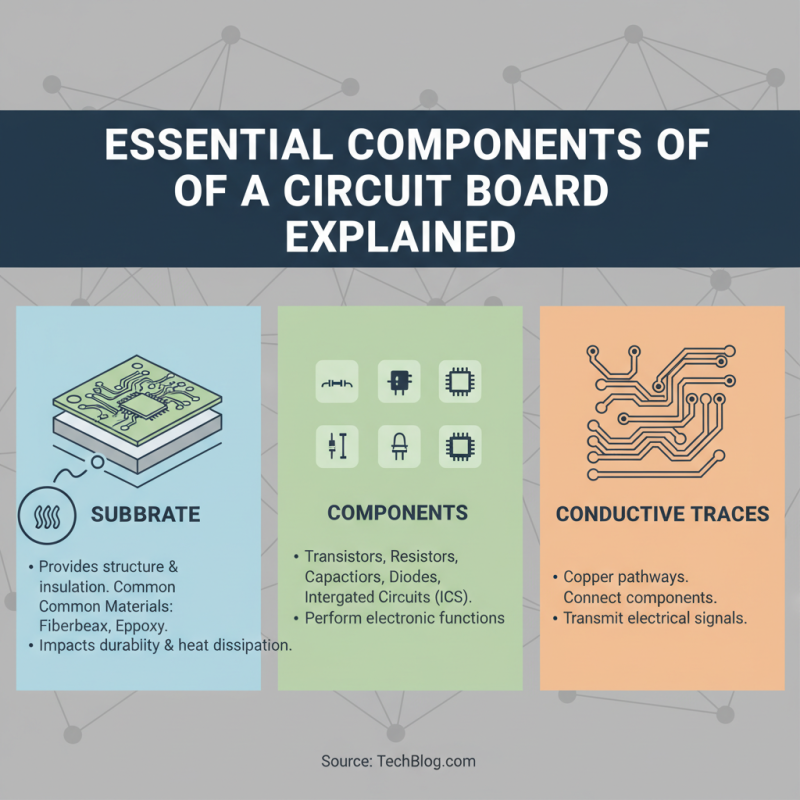
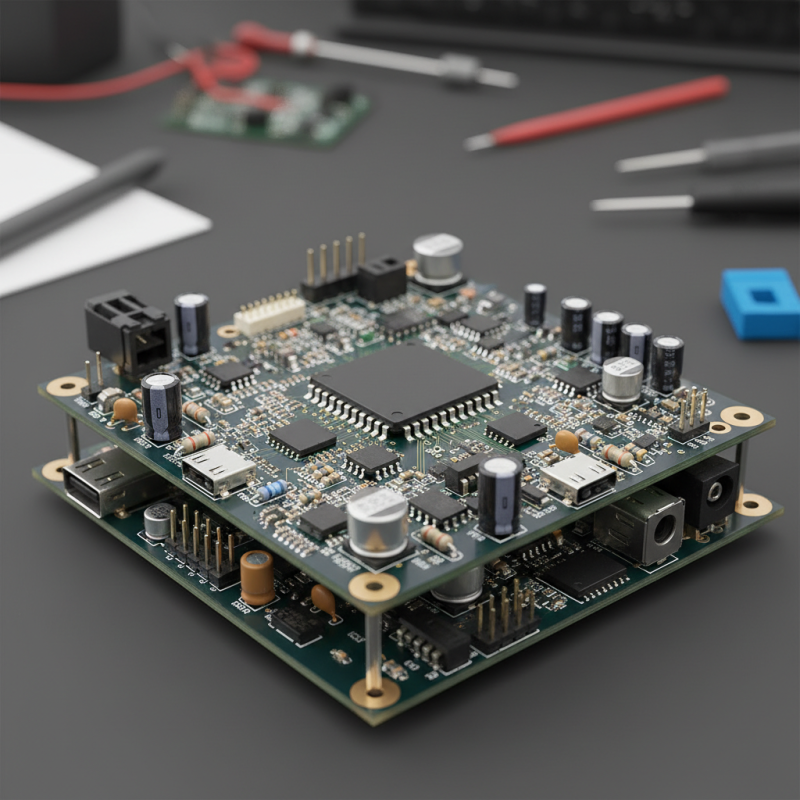
When exploring circuit boards, understanding their essential components is crucial. A circuit board is a complex assembly of various elements that work together. At the heart is the substrate, a layer that provides structure and insulation. Common materials include fiberglass and epoxy. This layer influences durability and heat dissipation.
Next, we have traces, the conductive paths that connect different components. These narrow lines of copper must be precisely designed. Improper design can lead to signal loss or interference. Capacitors and resistors are vital too. Capacitors store energy and smooth out electrical fluctuations, while resistors limit current flow. Their values must be calculated carefully to ensure reliability.
Finally, integrated circuits (ICs) are the brains of the operation. They house multiple components in a compact form. Each IC requires careful placement to optimize function. Designing a circuit board is challenging. Mistakes can lead to failures. It’s essential to test thoroughly before deployment. This process demands patience and precision. Each decision impacts overall performance and efficiency. Understanding these components helps in creating robust and effective circuit boards.
Understanding the Function of Resistors in Circuits
Resistors are vital components found in almost every circuit board. Their primary function is to limit the flow of electrical current. This property protects sensitive electronic components from damage. According to a recent industry report, resistors account for about 20% of all circuit board components. This percentage highlights their importance in circuit design.
In circuits, the resistor value determines how much current can pass through. This is calculated using Ohm's Law: Voltage equals Current times Resistance (V=IR). Understanding this relationship is crucial. For example, too high a resistance can lead to insufficient power supply. Conversely, too low a resistance can result in overheating and potential circuit failure.
**Tip 1:** Always double-check resistor values before a circuit assembly. It helps avoid costly errors.
**Tip 2:** Consider tolerances when selecting resistors. A 5% tolerance on a 1kΩ resistor could mean the actual resistance varies from 950Ω to 1050Ω.
Choosing the correct resistors involves understanding application needs, power ratings, and other factors. Using resistors that don't fit the circuit can lead to inefficiencies. This reflection on proper selection is critical for optimal circuit performance.
Top 10 Circuit Board Elements You Need to Know
This chart represents the importance and functionality of different circuit board elements. The data provides a comparative analysis of various components, highlighting how resistors play a crucial role in electrical circuits.
The Role of Capacitors in Circuit Design
Capacitors play a vital role in circuit design. They store and release electrical energy, making them essential for stabilizing voltage and power flow. In many applications, capacitors act as filters, smoothing out fluctuations in power supply. This function is crucial for devices that require stable operation.
Understanding capacitance is important for designers. It's measured in farads, indicating a capacitor's ability to store charge. A larger capacitance means more stored energy. However, designers often face challenges when selecting capacitors. The type and value can significantly impact a circuit's performance. Sometimes, designers overlook these factors, leading to unwanted oscillations or voltage spikes.
Capacitors come in various shapes and materials, each affecting their performance traits. For instance, ceramic capacitors are great for high-frequency applications, while electrolytic capacitors excel in bulk energy storage. However, every choice has trade-offs. A poorly chosen capacitor can lead to inefficiencies or even circuit failures. Designers must weigh these aspects carefully, reflecting on their past choices and striving for improved circuit reliability.
Importance of Integrated Circuits in Modern Electronics
Integrated circuits (ICs) are crucial for modern electronics.
They integrate numerous components, such as transistors, diodes, and resistors, onto a single chip.
This miniaturization allows devices to be smaller and more efficient. The capacity to perform complex calculations has revolutionized technology.
In today’s world, ICs enable everything from smartphones to medical devices.
They are pivotal in improving performance and reducing energy consumption.
However, not all IC designs are flawless. For instance, challenges like overheating and
signal interference still persist. Engineers continually strive to overcome these issues,
reflecting on the need for innovation.
The evolution of integrated circuits has impacted our daily lives significantly.
Yet, we must recognize the hurdles in production and design. Balancing complexity with reliability is a constant challenge.
As technology advances, so does the need for better IC solutions that meet rising demands.
Exploring the Use of Connectors and Switches in Circuit Boards
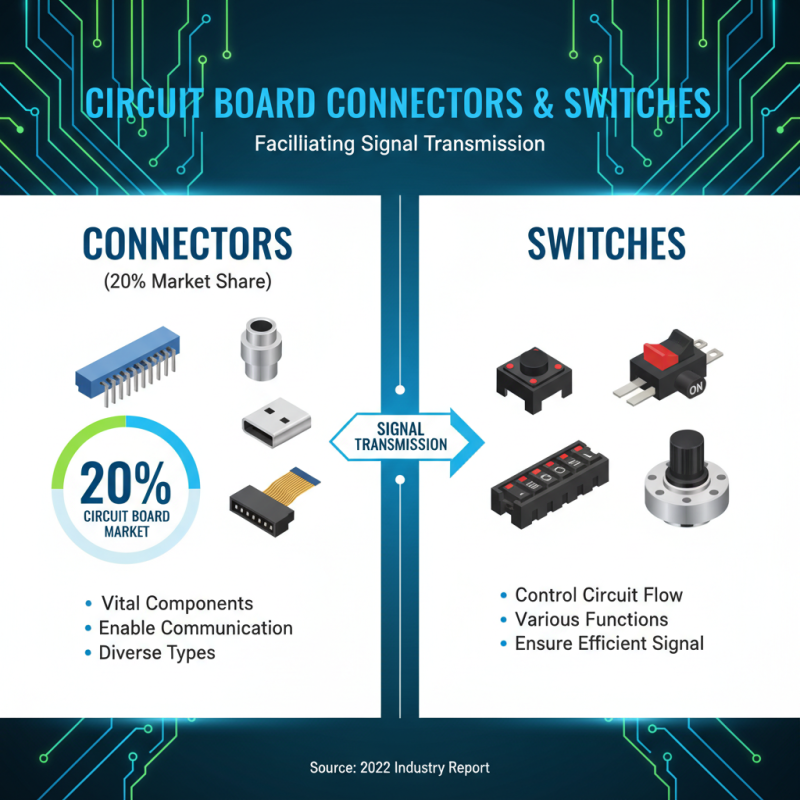
Connectors and switches are vital components of circuit boards. They facilitate communication between different circuit elements. Various types exist, each serving unique functions. A 2022 industry report indicates that connectors account for approximately 20% of the total circuit board market. This percentage emphasizes their importance in ensuring efficient signal transmission.
Switches play a critical role in controlling the flow of electricity. They allow users to turn devices on or off, creating a user-friendly experience. A recent study found that the global switch market is expected to grow at a rate of 6.4% annually. Such growth reflects the increasing reliance on electronic devices across industries.
However, not all connectors and switches perform equally. Poor-quality components can lead to signal loss and increased failure rates. A back-end review of several circuit board productions revealed that nearly 30% experienced connectivity issues due to substandard connectors. It is crucial for manufacturers to prioritize quality control. Balancing performance, reliability, and cost is an ongoing challenge in the field.