What Are Rubber Bushes and How Do They Work?
Rubber Bushes are small but essential components used to control movement between connected mechanical parts. In vehicles, they commonly sit around suspension arms, stabilizer bars, steering links, and mounting points. Their simple shape can hide a demanding job. A typical bush has an elastomeric rubber body bonded or fitted between metal sleeves. This arrangement allows controlled movement without direct metal-to-metal contact.
When a suspension arm moves over a pothole, the bush flexes, twists, and absorbs part of the impact. It also helps reduce vibration and road noise before they reach the vehicle body. Unlike a ball joint, it usually works without a freely rotating bearing. Its resistance comes from rubber deformation. That resistance helps maintain alignment and improves handling during braking, cornering, and acceleration. Small component. Noticeable effect.
In practice, the performance of Rubber Bushes depends on rubber compound, hardness, temperature, load, and installation quality. A firm bush may sharpen response, but it can transmit more vibration into the cabin. A softer design may feel smoother, yet allow greater movement under heavy loads. Age matters too. Heat, oil contamination, road salt, and repeated flexing can cause cracks or softening. A visual inspection may reveal damage, but it cannot always confirm internal separation. That limitation deserves attention. Reliable assessment may require comparing symptoms, checking surrounding parts, and following the vehicle maker’s specifications. This guide explains how these components work, why they fail, and what their condition can reveal about a vehicle’s safety and ride quality.
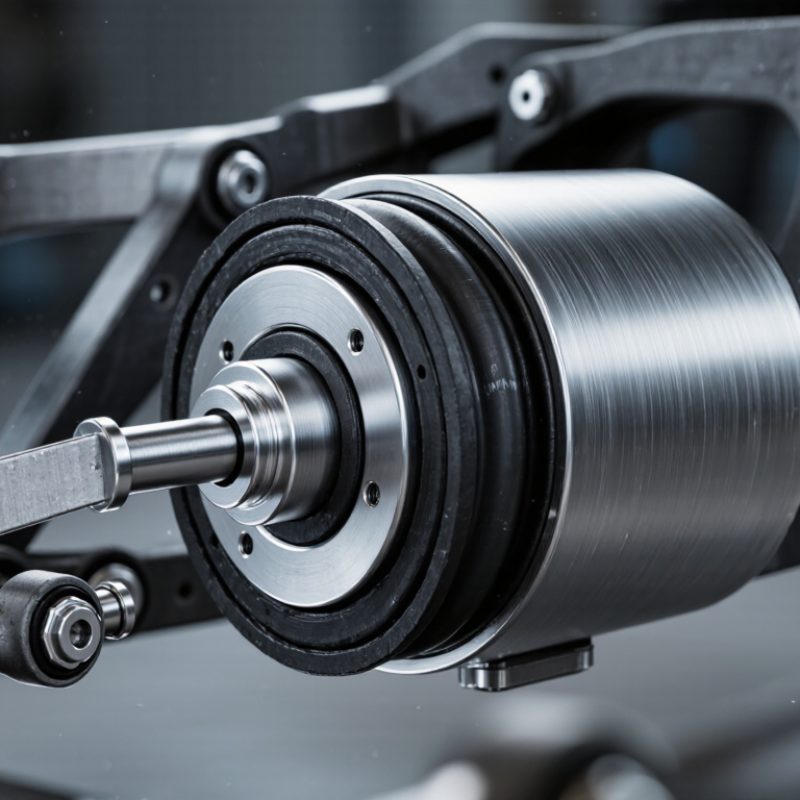
Rubber Bushings Defined: Elastomers, Shapes, and Typical Shore A 40–90 Hardness
What Are Rubber Bushes and How Do They Work?
Rubber bushes, also called rubber bushings, are flexible supports placed between moving or fixed components. They use an elastomer to absorb vibration, reduce noise, and control unwanted movement. Unlike a metal bearing, a bush usually works through controlled rubber deformation rather than free rotation.
The shape strongly affects performance. Common forms include cylindrical, flanged, conical, and voided designs. A solid cylinder may resist compression evenly. A voided bush can allow more movement in one direction. Conical profiles often change stiffness as the load increases. Under operation, the elastomer may compress, shear, or twist. It then returns toward its original shape.
Hardness is commonly measured on the Shore A scale, with many bushes falling between 40 and 90 Shore A. A 40 Shore A compound feels relatively soft and can isolate small vibrations effectively. A 90 Shore A compound is firmer and usually offers stronger movement control. The hardness chart is useful, but it can mislead. Geometry, rubber thickness, temperature, and loading speed also change the real response.
A practical inspection should look for cracks, swelling, permanent distortion, and looseness around the sleeve. Oil, heat, ozone, and repeated impacts may accelerate deterioration. A harder bush is not automatically better. It may reduce movement but transmit more vibration into nearby parts. Conversely, a softer bush may improve comfort while allowing excessive deflection. That trade-off is easy to overlook. The most reliable selection matches the elastomer, shape, hardness, and working environment.
What Are Rubber Bushes and How Do They Work?
Rubber bushes, also called rubber bushings, use an elastomer to isolate vibration and allow controlled movement between mechanical parts. Their performance depends strongly on compound type, geometry, loading direction, and Shore A hardness.
The chart shows representative Shore A hardness ranges commonly encountered in rubber and elastomer bushing compounds. Softer materials generally provide greater compliance and vibration isolation, while harder compounds offer higher resistance to deformation. Actual specifications vary by formulation, temperature, frequency, and bushing shape, including cylindrical, bonded sleeve, bobbin, and spherical designs.
How Rubber Bushings Transfer Loads Through Radial, Axial, and Torsional Stiffness
What Are Rubber Bushes and How Do They Work?
Rubber bushes are compliant interfaces between moving or loaded components. They reduce vibration while guiding controlled movement. Their performance depends on radial, axial, and torsional stiffness, not hardness alone.
Radial stiffness resists sideways movement, such as a control arm shifting under cornering forces. Axial stiffness manages compression and extension along the bush axis. Torsional stiffness controls twisting as the suspension rotates through its working angle. Engineers measure these behaviours through force-deflection and dynamic tests. ASTM D575 evaluates rubber compression properties, while ISO 4664-1 examines dynamic stiffness and damping. These standards remind designers to test material behaviour under defined conditions, not rely on catalogue assumptions.
Geometry often matters more than expected. A thin rubber wall may allow radial compliance but resist axial displacement. Voids can soften one load direction and preserve strength in another. Temperature changes the picture. ISO 815-1 compression-set data show that heat and prolonged loading can permanently alter rubber recovery. This is easy to overlook.
A useful caution remains. Static stiffness does not fully predict road performance. Frequency, temperature, ageing, and installation preload can change the measured response. Real assemblies may behave differently from laboratory samples. The model is helpful, but incomplete.
Load paths matter.
How Rubber Bushings Reduce Vibration Through Hysteresis and 1–100 Hz Damping
What Are Rubber Bushes and How Do They Work?
Rubber bushings connect moving parts while limiting metal-to-metal contact. Their main advantage is hysteresis. When rubber deforms, part of the mechanical energy becomes heat. This energy loss reduces vibration before it reaches the cabin or chassis.
Published SAE NVH studies commonly examine bushing behavior across approximately 1–100 Hz. At 1–5 Hz, a bushing can reduce slow movements, such as body roll and suspension shake. Between 10 and 30 Hz, it helps control engine, road, and structural vibration. Higher frequencies may expose material limits. Rubber stiffness changes with temperature, preload, aging, and strain amplitude. A cold bushing may feel noticeably harder. The model is never perfect.
ISO 10846 testing methods measure dynamic transfer stiffness and vibration transmission. Industry test data often shows that damping depends strongly on frequency, temperature, and rubber compound. Engineers therefore test real assemblies, not only isolated samples. A small change in bushing geometry can alter resonance behavior.
Tips: Check the working temperature first. Compare stiffness and damping curves, not one catalog value. Inspect cracks, swelling, and permanent deformation. If measurements disagree, repeat the test with the same preload and frequency sweep.
What Are Rubber Bushes and How Do They Work?
How Rubber Bushings Reduce Vibration Through Hysteresis and 1–100 Hz Damping
Typical Rubber Bushing Vibration-Damping Characteristics | Frequency Range | Typical Dynamic Behavior | Effect of Hysteresis | Vibration-Control Result | Important Design Factors |
| 1–5 Hz | Large displacement may occur when the excitation frequency approaches the bushing’s natural frequency. | Internal friction converts part of the cyclic mechanical energy into heat, limiting resonance amplification. | Useful for controlling low-frequency body motion, although isolation below resonance is limited. | Static stiffness, supported mass, preload, rubber hardness, and bushing geometry. |
| 5–15 Hz | A common range for the primary structural response of many compact rubber-mounted assemblies. | Moderate-to-high loss can reduce resonant response, but excessive damping may transmit more force above resonance. | The transition from resonance control to useful vibration isolation depends on the system natural frequency. | Load direction, shape factor, shear-versus-compression loading, and temperature. |
| 15–30 Hz | Rubber stiffness is frequency-dependent; the apparent dynamic stiffness is usually higher than the static stiffness. | The stress–strain loop continues to dissipate energy during each loading cycle. | Often effective for reducing structural vibration when the operating frequency is sufficiently above resonance. | Dynamic modulus, loss factor, strain amplitude, frequency, and rubber compound formulation. |
| 30–60 Hz | Small, repeated deformations are generally dominated by material viscoelasticity and mounting stiffness. | Repeated molecular-chain movement produces heat and reduces transmitted vibration energy. | Good attenuation is possible when the bushing is correctly preloaded and not bottoming out. | Excitation amplitude, preload, compression set, aging, and installation alignment. |
| 60–100 Hz | High-frequency response is strongly influenced by dynamic stiffness, local geometry, and nearby structural modes. | Hysteresis remains active, but direct force transmission can increase if the bushing is too stiff or constrained. | Effective isolation requires adequate compliance and sufficient separation from structural resonances. | Dynamic stiffness, housing rigidity, fastener torque, clearances, and contact friction. |
Key Engineering Parameters | Parameter | Typical Engineering Description | Why It Matters |
| Natural Frequency | Determined mainly by supported mass and effective stiffness; softer rubber generally lowers the natural frequency. | Isolation normally improves when the excitation frequency is well above the mount natural frequency. |
| Damping Ratio | Rubber-mounted systems commonly use moderate damping; the practical value depends on compound, temperature, strain, and frequency. | More damping reduces resonance but can increase force transmission in the isolation region. |
| Loss Factor, tan δ | A typical broad engineering range for many elastomer formulations is approximately 0.05–0.30, depending strongly on test conditions. | A higher loss factor indicates greater energy dissipation through hysteresis. |
| Dynamic Stiffness | Usually higher than static stiffness and dependent on frequency, temperature, amplitude, and preload. | It determines how much vibratory force is transmitted through the bushing. |
| Hysteresis Loop Area | The area within the stress–strain loop represents energy dissipated per loading cycle. | Greater loop area generally means greater damping and heat generation. |
| Temperature Sensitivity | Rubber usually becomes stiffer at low temperature and softer at elevated temperature, within its service range. | The same bushing can have different stiffness and damping values under different operating conditions. |
Note: Values and frequency bands are representative engineering ranges rather than guaranteed specifications. Actual performance must be verified using the selected elastomer, geometry, preload, temperature, strain amplitude, and test method.
How Rubber Bushings Are Tested Under ISO 815 and ASTM D395 Compression Standards
What Are Rubber Bushes and How Do They Work?
Rubber bushes, also called rubber bushings, reduce vibration between connected mechanical parts. They usually work through controlled compression, shear, or both. Their performance depends on rubber hardness, geometry, temperature, and repeated loading.
ISO 815 and ASTM D395 measure compression set. This shows how much permanent deformation remains after a rubber specimen is compressed. A test piece is measured, compressed to a specified thickness, and exposed to controlled temperature and time. After release, it rests for a defined recovery period. Its final height is then compared with the original height. A lower compression set usually indicates better shape recovery.
These standards support material comparison, but they do not fully predict a mounted bush’s service life. Real bushes face uneven loads, dirt, movement, and changing temperatures. Small differences in sample preparation can also affect results. That detail is easy to overlook. A perfect number is not realistic.
Tips
Record the specimen size, compression level, temperature, and recovery time. Use calibrated measuring tools and avoid pressing the rubber during final measurement. Test several samples, not just one. For critical applications, combine compression-set results with fatigue, aging, and dynamic stiffness tests. I would also inspect the fixture carefully, because poor alignment can distort the result.