How to Choose a Roller Conveyor Supplier in 2026?
Choosing the right Roller Conveyor Supplier in 2026 requires more than comparing prices. A conveyor may look simple, yet its performance depends on frame strength, roller spacing, motor quality, controls, and after-sales support. In a busy warehouse, one damaged bearing can slow an entire packing line. Small design decisions matter.
This guide examines practical criteria for evaluating suppliers with confidence. It considers load capacity, carton dimensions, conveyor speed, noise levels, safety features, and maintenance access. It also explores integration with warehouse software, sensors, robotic systems, and energy-efficient drives. Experienced suppliers should provide clear drawings, load calculations, testing records, and realistic delivery schedules. They should explain limitations, not hide them.
Site conditions deserve close attention. Dust, moisture, temperature changes, and frequent washdown can affect materials and service life. A supplier’s references can reveal how equipment performs after installation, not merely how it appears in a showroom. Speak with previous customers. Inspect similar systems when possible. No checklist is perfect. We might overlook future product changes or underestimate cleaning time. That is why a reliable evaluation includes technical evidence, operator feedback, spare-parts availability, and responsive service. The strongest supplier is not always the largest or cheapest. It is the partner that understands your workflow, documents its recommendations, and accepts responsibility when assumptions prove wrong.
Define Roller Conveyor Requirements: Load, Speed, Width, and 24/7 Duty Cycle
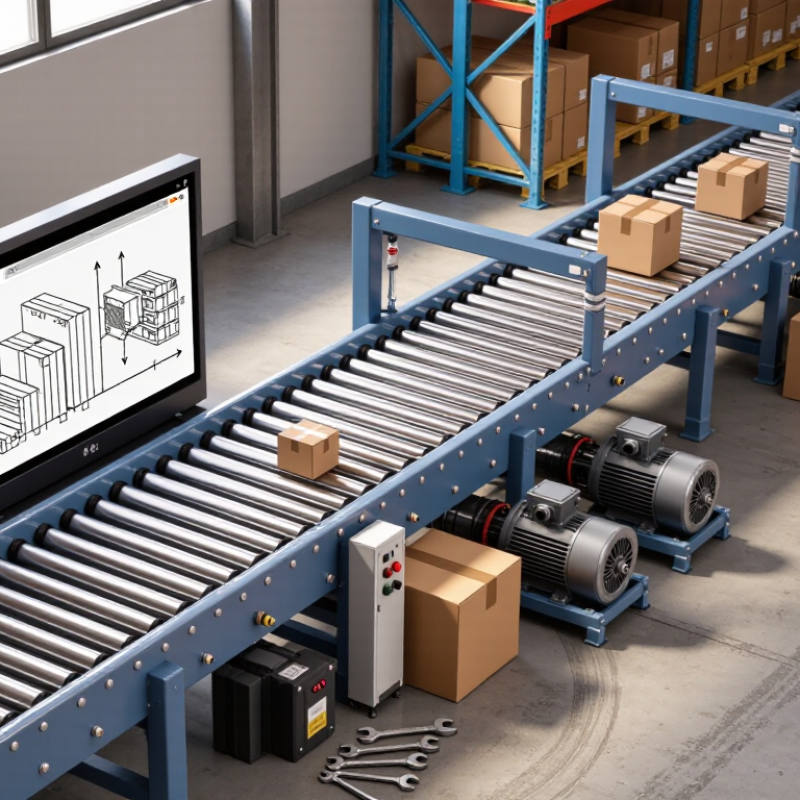
Choosing a roller conveyor supplier in 2026 starts with measurable requirements, not a catalog photograph. Record the heaviest unit, normal unit, and any unstable load. Include packaging, transfer impact, and the gap between rollers. A carton that looks light can still overload one roller when its base flexes. During a warehouse trial, measure actual contact points instead of trusting the stated product weight.
Speed must match the process, not merely the motor rating. Specify metres per minute, acceleration, stopping frequency, and whether loads queue. For fragile goods, sudden starts can cause sliding, corner damage, or uneven spacing. Set conveyor width from the load footprint. Allow side clearance without letting cartons rotate. Ask the supplier for calculations covering roller diameter, pitch, frame capacity, and drive torque. Request test results under your load profile.
A 24/7 duty cycle changes the conversation. Confirm operating hours, ambient temperature, cleaning method, noise limits, and maintenance access. Check bearing life, motor duty classification, spare-part availability, and response times in writing. Experience has taught us that a “continuous” label can hide frequent manual resets. That detail deserves challenge. Require a witnessed trial long enough to expose heat buildup and tracking problems. Leave a practical capacity margin, although excessive margin can waste money and floor space. A reliable supplier explains assumptions, admits limits, and adjusts the design when field measurements disagree.
How to Choose a Roller Conveyor Supplier in 2026?
Define roller conveyor requirements: load, speed, width, and 24/7 duty cycle.
This example requirement profile uses a 500 kg/m maximum load, 25 m/min operating speed, 600 mm usable conveyor width, and continuous 24-hour operation. The chart shows each requirement as a percentage of a practical design reference: 1,000 kg/m load, 40 m/min speed, 1,200 mm width, and 24 hours per day. Confirm product weight, accumulation needs, transfer spacing, environmental conditions, and maintenance access with the supplier before final selection.
Verify Supplier Engineering: Motor Sizing, 0.1–0.5 m/s Speed, and 99% Uptime
Choosing a roller conveyor supplier in 2026 requires more than comparing catalog prices. Ask for engineering calculations, not general assurances. The supplier should size the motor for load, roller friction, incline, acceleration, and duty cycle. Request the input assumptions and a sample calculation for your heaviest carton. A conveyor moving at 0.1 m/s needs different torque behavior from one running at 0.5 m/s. Both speeds can look acceptable during a showroom test. Real production is less forgiving. Warm motors, uneven pallets, and frequent starts expose weak design.
Tips: Test with your actual cartons, not empty rollers. Require speed measurements at minimum and maximum settings. Check overload protection and thermal monitoring. Ask how 99% uptime is calculated. Is it measured monthly, excluding planned maintenance, or based on a short trial? Those definitions matter. Review service response times, spare-part storage, and maintenance intervals. One uncomfortable question helps: what failure data supports the uptime claim?
An experienced supplier will explain assumptions clearly and admit where testing is still needed. Look for guarded drive components, accessible bearings, and documented electrical ratings. Ask for a load test at 0.5 m/s, then observe stopping and restarting under full load. At 0.1 m/s, watch for hesitation or motor overheating during repeated starts. Do not accept 99% uptime as a slogan. Put acceptance criteria in writing, including allowable downtime, measurement method, and corrective action. I would leave a modest design margin, although excessive margin can waste energy and reduce control quality. The calculation may still need revision.
Compare Materials and Safety: Steel Grades, Guarding, and ISO 13849 Compliance
When choosing a roller conveyor supplier in 2026, inspect materials beyond surface appearance. In plant audits, I have seen painted steel hide weak welds and uneven roller walls. Ask for steel grade certificates, coating thickness records, and load-test results. Carbon steel suits dry areas and heavy loads. Galvanized steel handles moderate moisture. Stainless steel is safer near washdown zones, but it costs more.
Check every transfer point, chain drive, and roller nip. Effective guarding should prevent hand access while keeping cleaning practical. Guards need secure fasteners, clear visibility, and controlled access for maintenance. Ask how the supplier protects operators from falling products and unexpected starts. Small details matter. A guard that vibrates loose is not reliable protection.
ISO 13849 compliance requires more than displaying a certificate. Request the risk assessment, required Performance Level, safety circuit calculations, and validation records. Confirm that emergency stops, interlocks, and restart controls match the conveyor’s actual hazards. The supplier should explain component traceability and software assumptions clearly. I would also inspect a working installation, not only review documents. Documentation can look complete while field conditions reveal gaps. My own checks are not perfect, so independent validation remains valuable. Suppliers willing to discuss weaknesses usually provide more trustworthy engineering evidence.