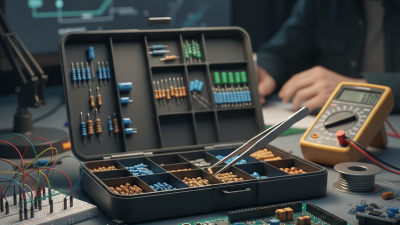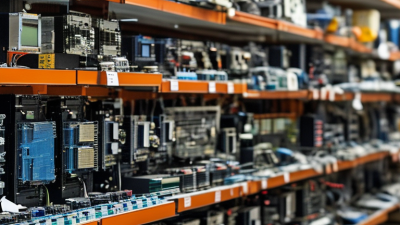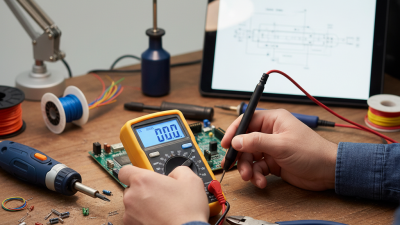
Choosing reliable electronic components and equipment suppliers requires more than comparing catalog prices. It demands evidence, technical judgment, and careful attention to operational detail. This guide examines leading Chinese suppliers through quality systems, product range, manufacturing capability, delivery performance, and after-sales support. It also considers how suppliers handle component traceability, counterfeit prevention, lifecycle changes, and export documentation.
Andy Grove, former Intel CEO and a major semiconductor industry leader, wrote, “Only the paranoid survive.” His warning remains relevant. A capable supplier should provide clear datasheets, batch records, inspection reports, and realistic lead times. Buyers should also verify certifications rather than trusting attractive website claims. Small details matter. A mislabeled reel can delay an entire production line.
China offers a broad manufacturing ecosystem, from passive components and connectors to industrial control equipment and testing instruments. Experienced suppliers may support customization, prototype runs, and volume production. However, no shortlist is perfect. A supplier with excellent pricing may lack stable technical support. Another may have impressive facilities but weak communication during shortages.
This introduction provides a practical framework for evaluating China’s best electronic components and equipment suppliers. The assessment focuses on verifiable experience, engineering competence, production consistency, and transparent business practices. Readers should still conduct audits, request samples, and confirm current certifications before purchasing. That step is sometimes skipped. It should not be. Reliable sourcing is built through repeated verification, not confident promises.
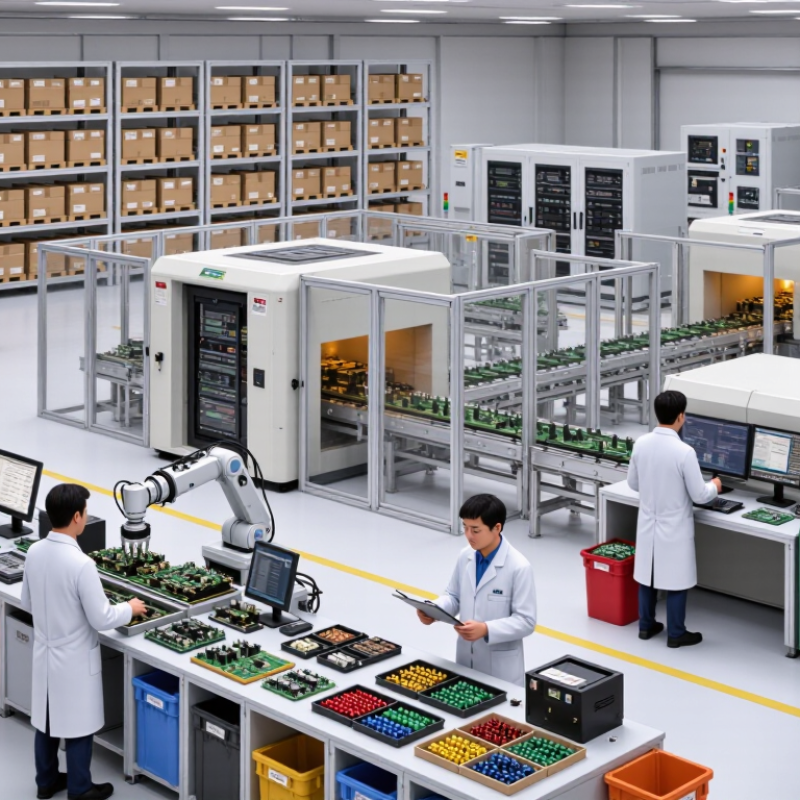
China Best Electronic Components and Equipment Suppliers
China’s electronic components and equipment supply industry covers a broad manufacturing network. It includes resistors, capacitors, connectors, sensors, semiconductors, printed circuit boards, and power modules. The scope also extends to assembly machines, testing instruments, packaging systems, and production-line equipment. These products support consumer electronics, industrial controls, renewable energy systems, transportation, and telecommunications.
A reliable supplier should offer more than a large catalogue. Buyers need clear specifications, stable production capacity, and traceable material records. Factory audits can reveal details that websites often miss. Check incoming inspection areas, calibration labels, moisture controls, and sample storage conditions. Ask for batch reports and test data. Lead time matters too. A low quotation loses value when delivery repeatedly slips. It happens.
China’s supply network can support custom designs, small pilot orders, and high-volume production. Engineering teams often review drawings, tolerances, thermal limits, and assembly methods before production. This practical communication reduces avoidable errors. However, supplier capability is not always consistent across product categories. A company skilled in passive components may lack experience with high-speed assemblies. Buyers should verify applicable safety, quality, environmental, and import requirements for each market. Independent testing may still be necessary. Certificates alone are not proof of every shipment’s quality. A careful sourcing process compares samples, production records, corrective actions, and after-sales responsiveness. Some uncertainty remains, especially when specifications are incomplete or designs change late. That limitation deserves attention.

China’s electronic manufacturing sector supplies a broad range of components and equipment for industrial, consumer, and communication applications. Major categories include semiconductors, resistors, capacitors, inductors, connectors, relays, sensors, and circuit protection devices. Printed circuit boards are also widely produced, from simple single-layer boards to dense multilayer assemblies. Quality varies between suppliers.
Power equipment forms another important category. Chinese manufacturers produce AC-DC power supplies, DC converters, battery management units, charging modules, transformers, and industrial control cabinets. Production equipment includes soldering systems, surface-mount machines, inspection tools, programmable test instruments, and automated assembly lines. These products often support high-volume manufacturing, but technical specifications must match the actual working environment. Heat, vibration, humidity, and unstable voltage can expose weaknesses that a catalog does not show. I have seen low-cost parts create expensive delays during testing.
Tips: Request recent datasheets, sample units, material declarations, and inspection records. Check operating temperature, tolerance, certification status, and production capacity. A supplier should explain traceability from raw materials to shipment. Independent testing is wise for safety-critical applications. Do not rely on attractive pricing alone. That choice can age badly. Also, confirm packaging quality, moisture protection, lead time, and after-sales response before placing a larger order.
Selected 2023 production indicators for major electronic components and finished electronic equipment manufactured in China. The figures are shown in billions of units for comparison.
Source: National Bureau of Statistics of China and Ministry of Industry and Information Technology, 2023 industrial production statistics. Values are rounded.
China’s electronic supply base includes component distributors, contract manufacturers, power-device specialists, connector producers, and equipment integrators. Each serves a different procurement risk. WSTS reported that global semiconductor sales reached about US$627 billion in 2024, showing strong demand for dependable, traceable supply. Yet volume alone proves little.
The Yangtze River Delta supports dense networks for connectors, sensors, displays, and industrial controls. The Pearl River Delta remains strong in assembly, consumer electronics, chargers, and small power systems. Shenzhen offers rapid prototyping, while Dongguan and Huizhou provide high-volume manufacturing capacity. SEMI’s World Fab Forecast continues to track substantial fabrication investment across China, especially in mature process nodes. These nodes support automotive, energy, and industrial applications.
Northern clusters add research, equipment servicing, and telecommunications expertise. Suzhou and Wuxi connect component production with testing, packaging, and precision machinery. Regional advantages can change quickly. Logistics, water access, engineering talent, and export controls all affect supplier reliability. The International Energy Agency has also recorded fast growth in global clean-energy manufacturing, increasing demand for power semiconductors and control equipment. Buyers should verify factory audits, quality certificates, failure-rate records, and backup capacity. A polished showroom is not enough. One overlooked weakness remains common: suppliers may report capacity, but not realistic delivery performance during peak seasons.
China’s electronic component and equipment suppliers should be assessed through evidence, not attractive catalogs. Quality begins with a documented management system, consistent inspection records, and traceable production batches. ISO 9001 certification can indicate controlled processes, but it does not guarantee every shipment is perfect. Request the certificate scope, issuing body, validity date, and covered factory location.
Technical compliance requires closer review. Depending on the product, check relevant IEC safety requirements, RoHS and REACH declarations, electromagnetic compatibility results, and electrical test reports.
Ask whether testing is performed internally or by an independent laboratory. A reliable supplier should provide clear part numbers, revision histories, material data, and change notifications. Small details matter. A missing date can weaken an otherwise useful report.
Supplier evaluation should include sample testing, factory audits, production capacity, and corrective-action records. Inspect packaging labels, moisture barriers, lot codes, and tamper evidence before accepting bulk goods.
Review the supplier’s policy for counterfeit prevention, warranty claims, and rejected materials. Delivery history also deserves attention; a low price means little if lead times repeatedly shift.
No checklist is perfect. Even experienced buyers may overlook subcontracting or unreported process changes. Use periodic reviews, not one-time approval, and compare inspection results against the original sample.
Sourcing Processes, Export Services, and Market Considerations
Reliable sourcing begins with a clear technical specification, not a quick price request. Define part numbers, tolerances, packaging, certifications, and expected annual volume. Experienced buyers should request traceability documents and recent inspection records. A supplier’s reply speed matters, but technical accuracy matters more. I have seen low quotations hide unclear lead times and substitute components. That mistake can delay an entire production line.
Tips: Compare at least three qualified suppliers. Ask for sample testing before large orders. Confirm factory capacity, payment terms, export documents, and warranty procedures in writing. Keep one approved sample beside incoming goods. Small details prevent expensive disputes.
Export service requires careful coordination. Suppliers should provide commercial invoices, packing lists, shipping dimensions, and accurate customs descriptions. Check whether the proposed transport method suits moisture-sensitive or static-sensitive equipment. Market conditions can change with currency rates, freight costs, regional demand, and inventory shortages. A supplier may appear competitive today, yet become costly after delivery charges and inspection fees. My own process is not flawless; forecasts can be wrong, especially during sudden demand changes. Build reasonable safety stock, but avoid excessive inventory with uncertain market demand. Regular supplier reviews, documented quality checks, and open communication create stronger purchasing decisions.